
Clinical Psychologist Dubai
With 20 years of experience as a clinical psychologist, I relocated to the United Arab Emirates in 2019. I work with adults presenting with depression, anxiety, fear, anger, grief, trauma, guilt, betrayal, and self-criticism. My approach is psychodynamic: it attends to what lies underneath the presenting difficulty rather than only to its surface. Practising in Dubai, a multi-cultural city, affirms that similar psychological difficulties occur across all nationalities and backgrounds.
What Do You See?
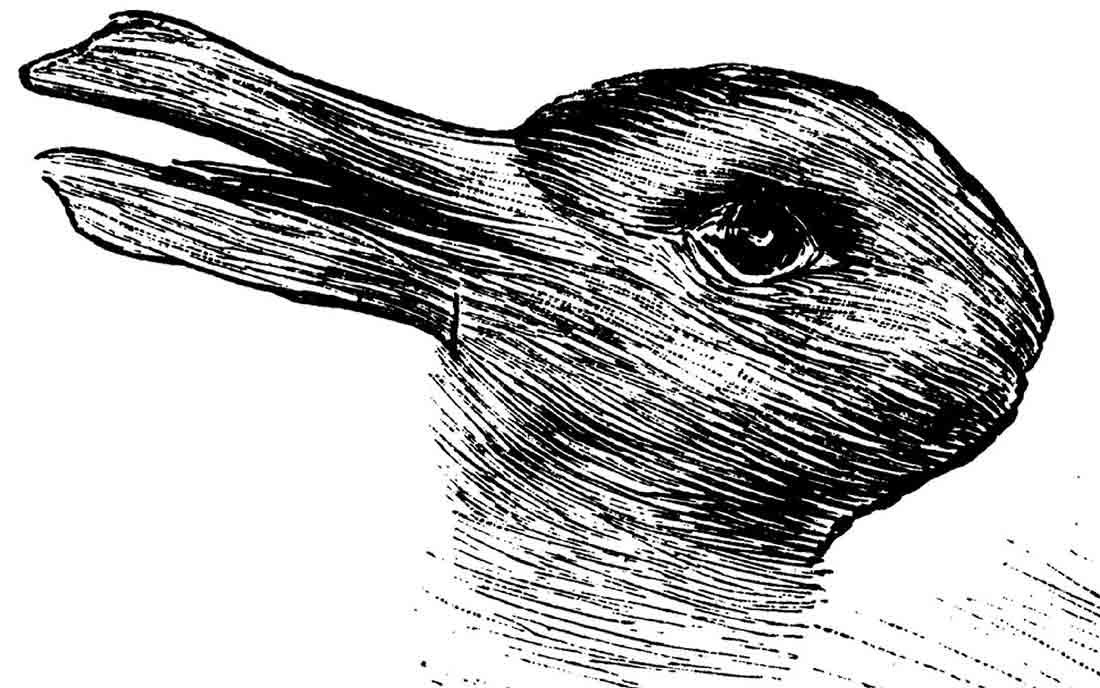
The image at the top of the page can be viewed as a rabbit or a duck. Both are present, but most people see only one at first. What we perceive is shaped by what we expect to see, and the factors underlying our psychological difficulties are often visible only when we have learned to look for them.

The Case for Therapy
We all experience psychological distress that can at times become impossible to deal with on our own. Some difficulties persist because we cannot see them clearly from within the experience itself. Friends and family care, but they have their own views and limits. Therapy offers something different: a professional relationship focused on your psychological life. Starting therapy requires the courage to admit that something is not working.
My Approach
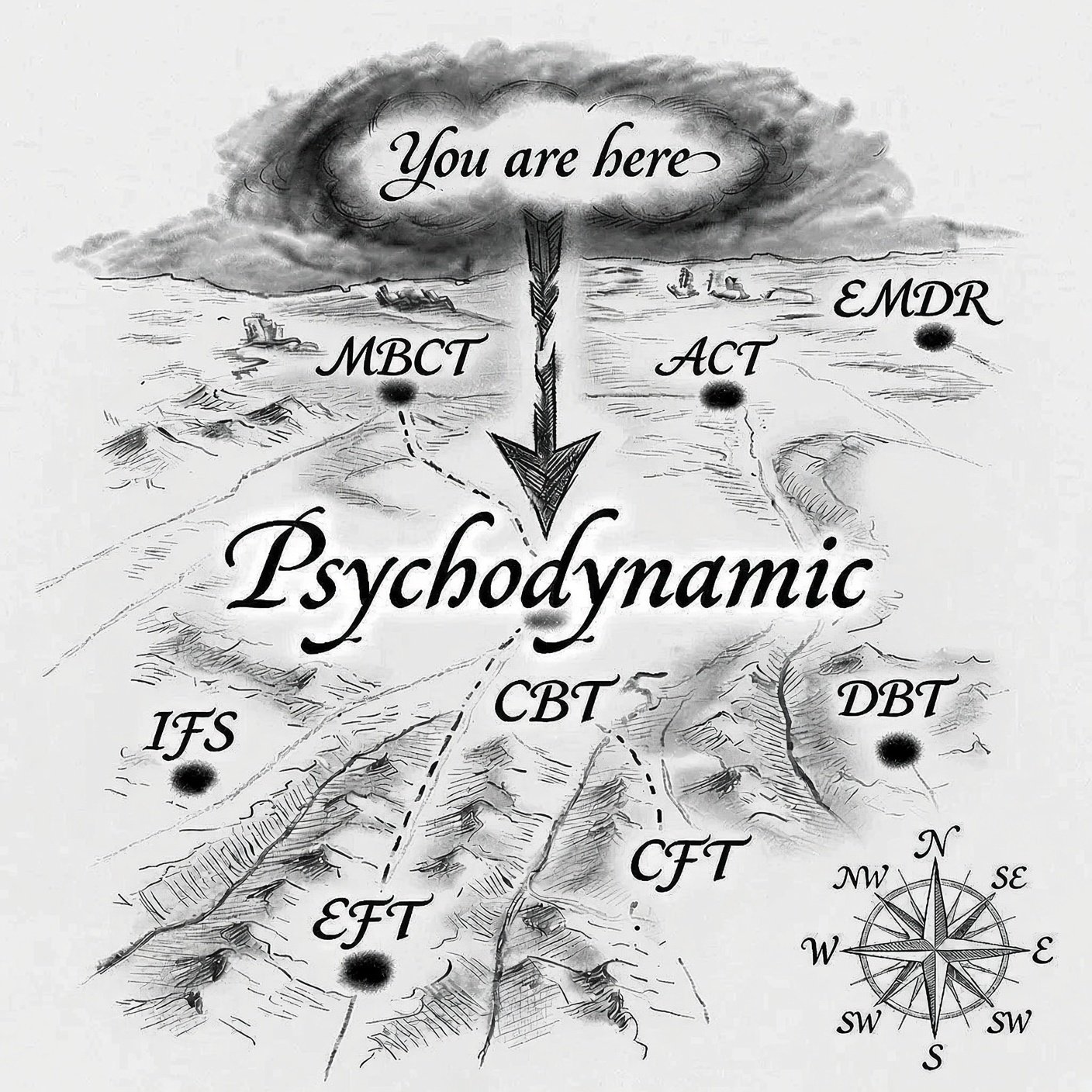
My approach is psychodynamic. It works with the patterns that influence your current difficulties: formative experiences, the ways you have come to relate to yourself and others, and the defences you rely on under pressure. The aim is not only to understand these patterns, but to gradually loosen their hold on how you live.
Aims of Therapy
There are two primary aims of Psychodynamic Therapy:
1. Developing Greater Insight

The development of greater psychological insight begins with talking about your current difficulties and the history that shapes them. Through this, your underlying patterns of thinking, feeling, and reacting come into view as the present is linked to the past.
You may wonder how the past shapes the present. We all experience its influence when a remark or tone of voice evokes unexpected emotions, skewed perceptions, and defensive responses. When a small remark produces an exaggerated reaction, the size of the reaction usually points to something older that has been touched.
You are encouraged to freely express your thoughts, feelings, and experiences in sessions. I offer interpretations, and your feedback helps to clarify how these patterns work and what they protect against, e.g. exploring how a childhood requirement to be "good" shapes current difficulty saying no, and serves to maintain approval.
Therapy brings into view the patterns that have been operating unconsciously, and the experiences from which they took shape. Understanding alone does not undo them, but it makes the changes that follow possible.
2. Application of Insight

Insight alone rarely produces change. Many people arrive at therapy expecting that understanding why they are the way they are will be sufficient, that once the source of a difficulty is identified, it will resolve. This expectation is intuitive, but does not match how psychological change actually occurs.
The patterns psychodynamic therapy addresses are emotional, automatic, and often laid down before words could be put to them. They operate fastest when you are under stress, in conflict, or close to someone, exactly the situations in which thinking clearly is hardest. Insight provides the map, but the work of interrupting the familiar response has to be done in the moment, again and again, until the new way becomes familiar.
In practice, this looks like noticing the pull toward shutting down on a heavy day, and choosing one small action that contradicts the message that nothing matters. It looks like recognising that the fear of being judged in a meeting is older than the meeting, and entering the room despite the urge to disappear. It looks like noticing the impulse to withdraw when a partner expresses dissatisfaction, and staying with the conversation instead.
These are small movements, but repeated enough times they begin to reshape how you function. Technique-driven approaches aim at symptom relief, which can be valuable, but is rarely the whole answer. Psychodynamic therapy works underneath the symptom, on what the symptom is expressing and protecting against. The change it works toward is more fundamental.
Conclusion
Three changes typically follow a course of psychodynamic therapy. Distress lessens because what once felt overwhelming can now be understood and addressed. The patterns that have been working against you, shaping your relationships, decisions, and sense of self, begin to weaken their hold. A more integrated understanding of how you came to function this way takes shape. From this, different ways of being with yourself and with others become possible."